

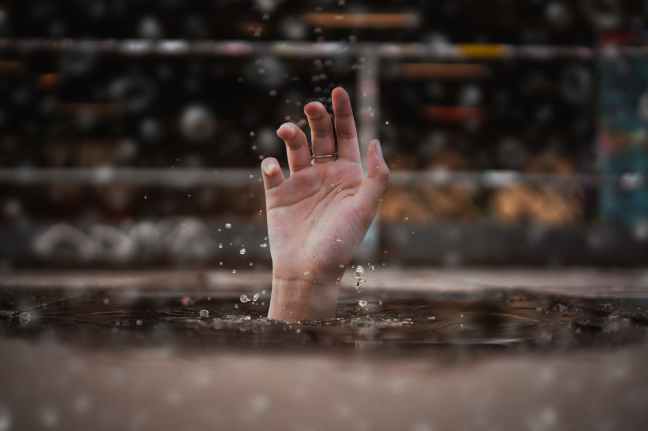
Last week, I wrote about the basic problem of the human condition: that no matter how much we try and tell ourselves otherwise, no matter how much the world tells us we’re perfect just the way we are, we are far from perfect.
But if we’re all far from perfect, that means there’s only so much help we can give each other. What we need is help from outside ourselves. Help from someone or something that is not broken. We need a higher power.
This need we have for a higher power has led to human beings inventing deities and religions for as long as we’ve been on this planet. We’ve worshiped aspects of nature, or people whose stories have been passed down without all the menial stuff that made them real. And we’ve straight up made up deities to explain all of the things that happen. At least, I think we made them up, but maybe we’ve been fooled by people or spirits who tricked us into thinking they were deities, I really don’t know for sure.
The problem with all of the religions of the world (save three notable ones I’ll get to in a minute) is that the deities are really no better than the broken, sinful people who worship them. The Greek gods, as well as the Babylonian, Sumerian, Egyptian, and so many other deities, behaved worse than most humans!
But there are three religions who recognize one God. Just one, who is creator and ruler of all, and is perfect and holy. Those religions are Judaism, Christianity, and Islam. All three of these religions which, incidentally, make up about 55% of the world’s population, all recognize, believe in, and worship this one God, who is all-knowing, all-powerful, unchanging, perfectly just, and perfectly holy. Their disagreement basically comes down to their belief about how people are reconciled to this one God.
If we agree that we need help to be the people we want to be, and if we agree that we need to look outside ourselves for that help, and if we agree that the outside help has itself to be perfect in order to help, then the God of Judaism, Christianity, and Islam is the only God who makes sense. If you don’t believe in God, then it becomes very, very difficult to answer some basic questions, like:
If there is no perfect standard against which to measure ourselves and others, then how could we possibly know that we are not perfect? Again, this isn’t about just pretending like perfection is some human standard that doesn’t exist, because we all know deep down that we just wish, plain and simple, that we were better people.
If there is a standard, then it had to come from somewhere. And, as we just agreed, that standard cannot have been made up by imperfect beings. But, if we are all just random accidents resulting from a cosmic accident like the Big Bang, what created the standard? What prompted organisms to evolve? What put the evolutionary impulse into the world that says survival and procreation are primary goals? Why would a being without a conscience care about its progeny? And what evolutionary advantage would a conscience provide? To the contrary, it would be a heck of a lot easier to survive if I didn’t have to worry about any ethical ramifications of my survival.
A standard of perfection had to come from a perfect being – call it God. It can’t be more than one god, or they might disagree. Absolute power cannot be shared, or it’s not absolute.
So, this God is the only one who can help. Which means we have to ask. But how? How do we find Him? How can we look outside of our existence to see our creator and God?
We can’t. It’s not possible.
If we want help from God, we have to hope that He will find us. That’s the only way this works: if the Creator reveals Himself to his creatures.
Next week: God reveals Himself
~Ever, RevErik
 Honest Musings from a Regular Guy... Who Also Happens to Be a Lutheran Pastor